
Laser cataract surgery (FLACS) costs significantly more than standard phacoemulsification but has not shown consistently better visual outcomes in large clinical trials for straightforward cataracts. Its disadvantages include higher cost, unsuitability for dense cataracts, additional corneal energy exposure, longer procedure time, and no proven advantage for premium IOL centration over an experienced surgeon. It offers genuine benefit for patients with significant corneal astigmatism or specific structural complexity. For most routine cataracts, an experienced surgeon performing phacoemulsification achieves equivalent results at lower cost.
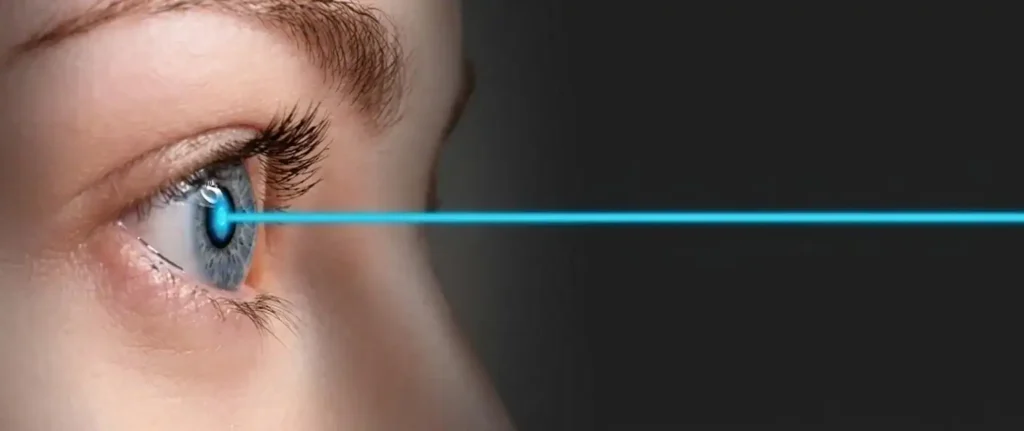
When patients come for cataract surgery consultations, one question comes up repeatedly: “Doctor, should I go for the laser surgery?” The word “laser” implies precision, and many patients assume it is automatically better. The reality is more nuanced.
Here is an honest look at what laser cataract surgery involves, where its limitations lie, and how to choose the right approach for your eyes and your budget.
What Is Laser Cataract Surgery and How Does It Differ from Standard Surgery?
Conventional cataract surgery uses a procedure called phacoemulsification, where an ultrasonic probe manually breaks up and removes the cloudy lens. The surgeon makes the incisions, creates the capsule opening, and uses skill and experience throughout each step.
Femtosecond Laser-Assisted Cataract Surgery (FLACS) uses a laser to perform some of these steps: creating the corneal incisions, making the capsule opening (capsulorhexis), and softening the lens before the surgeon continues. It is not a fully automated procedure. The surgeon still uses ultrasonic phacoemulsification and manual technique for the most critical parts.
Both approaches result in replacement of the cloudy lens with an artificial intraocular lens (IOL). The final visual outcome depends far more on the IOL chosen and the surgeon’s skill than on whether a laser was used for the preparatory steps.
Our cataract surgery page explains both approaches and what patients at Shri Krishna Netralaya can expect.
The Real Disadvantages of Laser Cataract Surgery
Higher cost without guaranteed better outcomes: FLACS costs two to three times more than standard phacoemulsification. A meta-analysis in JAMA Ophthalmology and a Cochrane review both found no consistent difference in final visual outcomes between the two approaches for straightforward cataract cases. For uncomplicated cataracts, the additional cost does not translate to better vision.
Not suitable for every eye: The laser cannot penetrate a very dense or mature cataract effectively. Conditions such as a small pupil, inability to remain still, certain corneal scars, or claustrophobia may also prevent laser use. In these cases, the surgeon switches to the standard technique mid-procedure.
Energy delivery to the cornea: The femtosecond laser delivers energy pulses to create incisions. Some studies note a measurable increase in corneal endothelial cell loss with FLACS in certain patient groups. For patients who already have reduced endothelial cell counts, this is a meaningful concern.
Longer procedural time: FLACS requires a docking step before the main surgery begins, adding time under the operating light and increasing discomfort for anxious or elderly patients.
No proven benefit for premium IOL outcomes: Patients choosing trifocal or extended depth of focus lenses are sometimes told laser capsulotomy improves IOL centration. Clinical studies have not consistently confirmed this advantage over a skilled surgeon’s manual technique.
When Laser Cataract Surgery Does Offer a Genuine Advantage
FLACS does have specific scenarios where it can add value. Patients with astigmatism benefit because the laser can create precise arcuate incisions to reduce corneal astigmatism, which is more difficult to achieve with a manual blade. Eyes with certain structural complexities may also benefit from the precision of a laser capsulotomy over manual technique. In these cases, the additional cost may be justified.
Shri Krishna Netralaya in Chhatrapati Sambhajinagar (Aurangabad) offers comprehensive cataract evaluation and surgery under Dr Rohit Bang. The clinic is located at Plot No. 50, Mahesh Nagar, Jalna Road, Chhatrapati Sambhajinagar 431001. Contact: +91 9637268888. Website: shrikrishnanetralaya.com.
What Actually Determines the Outcome of Your Cataract Surgery?
Research consistently shows that the most important predictors of good cataract surgery outcomes are the surgeon’s experience, the quality of the intraocular lens chosen, accurate pre-operative biometry for IOL power calculation, and management of co-existing conditions such as dry eye or macular disease.
The laser-versus-standard decision is far less consequential than choosing the right IOL for your lifestyle and ensuring your surgery is performed by a qualified ophthalmologist who operates regularly.
At Shri Krishna Netralaya, Dr Rohit Bang discusses each of these factors individually before making any recommendation. Visit our contact page to schedule a consultation.
Questions to Ask Before Choosing Between Laser and Standard Cataract Surgery
Before committing, ask your surgeon: Does my cataract complexity make me a better candidate for FLACS? What IOL options are available with each approach? What is the cost difference, and what does the research say for my cataract type? How many cataract procedures do you perform each year?
A surgeon confident in both techniques will give you an honest answer rather than defaulting to the more expensive option.
Get an Expert Cataract Assessment at Shri Krishna Netralaya
Making the right decision about cataract surgery requires a proper examination, accurate biometry, and a discussion with an ophthalmologist who understands both the clinical evidence and your individual eye health.
Dr Rohit Bang at Shri Krishna Netralaya provides thorough pre-operative cataract assessments and recommends the approach that genuinely suits each patient’s eyes, lifestyle, and priorities.
Call +91 9637268888 or visit us at Plot No. 50, Mahesh Nagar, Jalna Road, Chhatrapati Sambhajinagar 431001.
FREQUENTLY ASKED QUESTIONS
Q1: Is laser cataract surgery better than traditional cataract surgery? For most straightforward cataracts, large clinical studies have found no consistent difference in final visual outcomes between laser-assisted (FLACS) and traditional phacoemulsification. Laser surgery costs significantly more. The surgeon’s experience and the choice of intraocular lens matter more than the surgical technique in most cases.
Q2: What are the main disadvantages of laser cataract surgery? The key disadvantages are higher cost without guaranteed better outcomes for most patients, unsuitability for very dense or mature cataracts, increased corneal energy exposure, longer procedural time with docking, and no consistent evidence of better premium IOL results compared to an experienced surgeon’s technique.
Q3: Can laser cataract surgery fail? Like any surgical procedure, laser-assisted cataract surgery carries risks. The laser component can occasionally cause anterior capsule tears if the laser energy does not fully penetrate a dense lens. The surgeon then completes the procedure manually. Serious complications are rare when performed by qualified surgeons on screened patients.
Q4: Who should consider laser cataract surgery? Patients who may benefit most from FLACS are those with significant astigmatism requiring precise corneal incisions, or those with specific structural features where laser capsulotomy offers an advantage. For uncomplicated cataracts in otherwise healthy eyes, standard phacoemulsification by an experienced surgeon is typically equally effective at lower cost.
Q5: Is cataract surgery painful? Cataract surgery is performed under topical or local anaesthesia. The procedure itself is not painful. Mild pressure or discomfort may be felt during the docking step in FLACS. Recovery is generally quick, with most patients noticing improved vision within one to two days.
Q6: How long does cataract surgery take? Standard phacoemulsification typically takes 15 to 20 minutes per eye. FLACS adds 10 to 15 minutes for the laser docking step. Both are performed as day procedures and patients go home the same day.
Q7: What is the recovery time after cataract surgery? Most patients notice significantly improved vision within 24 to 48 hours. Complete stabilisation typically takes four to six weeks. Activity restrictions during recovery include avoiding heavy lifting, swimming, and eye rubbing for the first month.
Q8: What type of lens is best for cataract surgery? The right lens depends on your lifestyle, prescription, and other eye conditions. Options range from standard monofocal lenses to premium trifocal and extended depth of focus lenses. Your ophthalmologist will recommend the most suitable option after measuring your eye accurately.
Q9: At what stage does a cataract need surgery? Cataract surgery is recommended when the cloudiness affects your daily activities, such as driving, reading, or watching television, and cannot be adequately corrected with glasses. There is no benefit to waiting until a cataract is “fully ripe” with modern phacoemulsification techniques.
Q10: How do I prepare for a cataract consultation at Shri Krishna Netralaya? Bring your current glasses or contact lens prescription, a list of any medications you take, and any previous eye surgery records. Avoid wearing contact lenses for at least three days before the evaluation, as they can temporarily alter corneal shape and affect biometry measurements.
This article is authored by Dr Rohit Bang, Ophthalmologist at Shri Krishna Netralaya. The article references peer-reviewed literature including a Cochrane systematic review and a meta-analysis published in JAMA Ophthalmology (2016) on FLACS versus conventional phacoemulsification outcomes.