There is no single best age for eye surgery. LASIK is best suited to adults aged 18 to 40 with a stable prescription, ideally from the mid-20s onward. After 40, presbyopia limits the benefit of standard LASIK; refractive lens exchange or premium IOLs are better options. Cataract surgery is appropriate at any age when the cataract meaningfully impairs daily vision, most commonly in the 60s and 70s. There is no upper age limit for cataract surgery provided the patient is medically fit. The right procedure and timing is determined by a comprehensive examination, not age alone.
Patients ask this question at every stage of life. A 22-year-old wants to know if they are old enough for LASIK. A 45-year-old wonders whether laser surgery is still worthwhile when reading glasses are appearing. A 68-year-old wants to know if cataract surgery is safe at their age.
The answer is that there is no single “best age.” The right time depends on the procedure, the stability of your vision, your overall eye health, and what you want to achieve.
Why Age Matters in Eye Surgery
Age affects eye surgery in two main ways. First, your eyes change throughout life: refractive error stabilises in young adulthood, the natural lens loses flexibility in your 40s (presbyopia), and later becomes cloudy (cataracts). Second, different procedures are designed for different stages of this journey. Timing surgery to match the right window is what a qualified surgeon assesses during consultation.
Our eye care services page provides an overview of procedures available at Shri Krishna Netralaya.
Ages 18 to 40: The LASIK and Refractive Surgery Window
This is the primary window for laser refractive surgery, including LASIK, PRK, and SMILE. The general criteria are consistent across the major ophthalmology guidelines.
Minimum age 18, preferably mid-20s. Most surgeons will not perform LASIK before 18 because the eye is still maturing. Prescriptions in the early 20s can still shift. The mid-20s, when myopia typically stabilises, is the most reliable starting point. The standard requirement is stability for at least 12 months, ideally two years.
Upper practical limit: around 40 to 45. After the early 40s, presbyopia affects near vision regardless of LASIK. A 43-year-old who undergoes LASIK for distance will still need reading glasses. This is not a complication; it is a natural change that LASIK cannot prevent.
Surgery in the late 30s and early 40s can still be worthwhile depending on lifestyle. Some patients opt for monovision LASIK, one eye corrected for distance and one for near, to extend spectacle independence.
Patients unsuitable for LASIK may benefit from ICL (implantable collamer lens) surgery, which has no corneal thickness requirement and is reversible. Visit our contact page to discuss which option suits your eyes.
Ages 40 to 55: When Presbyopia Changes the Equation
Once presbyopia is established, LASIK alone is rarely the complete solution. Options at this stage include monovision LASIK, laser blended vision, or refractive lens exchange (RLE) with a premium multifocal or EDOF intraocular lens.
RLE is essentially cataract surgery performed before a clinical cataract develops. It permanently replaces the natural lens with an artificial lens that addresses distance, intermediate, and near vision simultaneously, and eliminates future cataract risk. The trade-off is that RLE is a more significant intervention than LASIK and carries intraocular procedure risks. An experienced surgeon will help you weigh whether the benefit justifies this approach at your stage.
Ages 55 and Above: Cataract Surgery and Beyond
Cataract surgery becomes appropriate when lens clouding affects daily activities such as driving, reading, or watching television to a degree that glasses cannot correct. This most commonly occurs in the 60s and 70s.
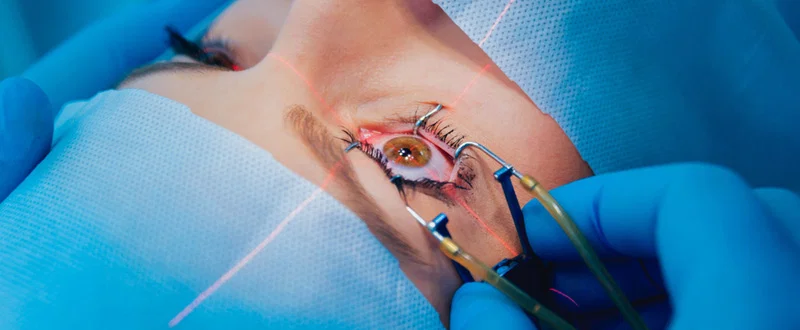
There is no maximum age. Studies show patients in their 80s and 90s benefit significantly from cataract surgery provided their general health allows anaesthesia. The procedure takes 15 to 20 minutes under local or topical anaesthesia as a day surgery.
At Shri Krishna Netralaya, pre-operative cataract assessments include medical fitness review, precise biometry for IOL power calculation, and a discussion of lens options suited to each patient’s lifestyle.
Is There an Age That Is Too Old for Eye Surgery?
For most eye surgeries, there is no absolute upper age limit. What matters is whether the patient’s overall health supports the procedure, the expected benefit is meaningful, and whether conditions such as advanced glaucoma or macular degeneration would limit improvement.
For the large majority of older patients, cataract surgery answers the key questions, will vision meaningfully improve and can this be done safely, positively.
Shri Krishna Netralaya in Chhatrapati Sambhajinagar (Aurangabad) offers eye surgery consultations for all age groups under Dr Rohit Bang. The clinic is located at Plot No. 50, Mahesh Nagar, Jalna Road, Chhatrapati Sambhajinagar 431001. Contact: +91 9637268888. Website: shrikrishnanetralaya.com.
How an Experienced Eye Surgeon Assesses Readiness
Age is one input among several. A consultation considers prescription stability, corneal health, natural lens clarity, intraocular pressure, pre-existing dry eye, and the visual outcome you want to achieve. A thorough consultation includes diagnostic imaging and takes at least 45 to 60 minutes.
Consult Dr Rohit Bang at Shri Krishna Netralaya
Whether you are 25 and curious about LASIK, 50 and frustrated with progressive glasses, or 70 and noticing cloudy vision, the right step is a comprehensive evaluation with a qualified surgeon.
Dr Rohit Bang at Shri Krishna Netralaya sees patients across all age groups at Plot No. 50, Mahesh Nagar, Jalna Road, Chhatrapati Sambhajinagar 431001.
Call +91 9637268888 to book your evaluation.
FREQUENTLY ASKED QUESTIONS
Q1: What is the best age for LASIK eye surgery? The ideal age for LASIK is generally the mid-20s to late 30s, when refractive prescription has stabilised for at least 12 to 24 months. LASIK is not recommended before 18. After the early 40s, presbyopia begins to limit the benefit of standard LASIK for near vision tasks.
Q2: Is there a maximum age for LASIK? There is no strict upper age limit for LASIK, but the practical benefit decreases after the early 40s because presbyopia increasingly affects near vision regardless of laser correction. Patients over 45 may be better served by refractive lens exchange with a premium IOL.
Q3: What age is best for cataract surgery? Cataract surgery is recommended when the cataract significantly impairs your daily activities and glasses can no longer adequately correct the vision loss. This typically occurs in the 60s and 70s, but it is symptom-driven rather than age-driven. There is no benefit to waiting for a “ripe” cataract with modern surgical techniques.
Q4: Is cataract surgery safe for people over 80? Yes. Well-conducted studies confirm that cataract surgery benefits patients in their 80s and 90s, provided their general health is adequate for anaesthesia. The procedure is brief and performed under topical or local anaesthesia, which minimises systemic risk.
Q5: Can a 22-year-old get LASIK? Yes, provided the prescription has been stable for at least 12 months and the corneal profile is appropriate. Many surgeons prefer to wait until the mid-20s when myopia is more reliably stable. A full pre-LASIK evaluation will confirm candidacy.
Q6: What eye surgery options are available after 45? After 45, when presbyopia becomes established, options include monovision LASIK, laser blended vision, or refractive lens exchange with a premium multifocal or EDOF intraocular lens. The best option depends on the degree of presbyopia, lifestyle needs, and whether a cataract is beginning to form.
Q7: What is refractive lens exchange and how does it differ from cataract surgery? Refractive lens exchange (RLE) replaces the natural crystalline lens with an artificial intraocular lens to correct vision before a cataract has developed. The surgical procedure is identical to cataract surgery. RLE permanently eliminates future cataract development in that eye.
Q8: When should children have eye surgery? Most refractive procedures are reserved for adults with stable prescriptions. An exception is congenital cataract, which must be treated urgently in infancy or early childhood to prevent permanent vision loss (amblyopia). Strabismus surgery may also be appropriate in young children when indicated.
Q9: Does LASIK wear off with age? The corneal reshaping from LASIK is permanent and does not reverse. However, natural age-related changes such as presbyopia (difficulty reading after 40) and eventual cataract development are independent of LASIK and progress regardless of whether you had the procedure.
Q10: How do I know which eye surgery is right for my age? The only reliable way to determine the best option is a comprehensive eye examination with an experienced ophthalmologist who reviews your prescription history, corneal health, natural lens clarity, and lifestyle requirements. At Shri Krishna Netralaya, Dr Rohit Bang provides this assessment and explains the options that suit your specific age and eye profile.
This article is authored by Dr Rohit Bang, Ophthalmologist at Shri Krishna Netralaya. Content covers LASIK age guidelines from the American Academy of Ophthalmology, long-term LASIK outcomes research, and cataract surgery safety data across age groups.