- +91 9637268888
- shrikrishnanetralaya@gmail.com
- Aurangabad
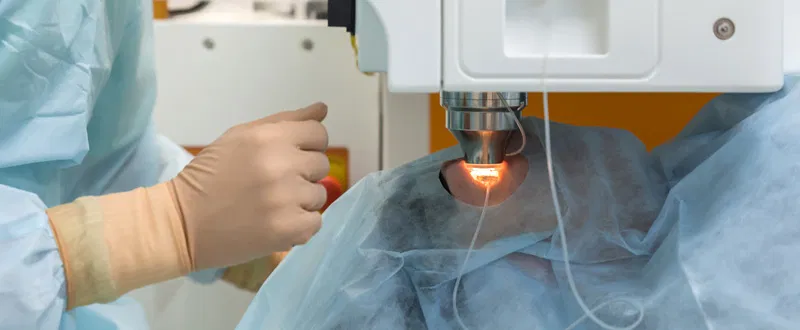
If you are considering surgery to get rid of your glasses or contact lenses, you have almost certainly come across three names: LASIK, SMILE, and Contoura Vision. Most clinics present all three as variations of the same thing. They are not. Each procedure works differently, suits different eye profiles, and produces different outcomes for different patients. Understanding what actually separates them is what allows you to walk into a consultation with the right questions rather than leaving with the wrong procedure. Shri Krishna Netralaya is home to one of the most experienced LASIK surgeons in Aurangabad, and this guide reflects the clarity we offer every patient before any decision is made.
The right procedure for you depends on your corneal thickness, the shape of your cornea, your prescription strength, your lifestyle, and your visual demands after surgery. None of these factors can be assessed without a thorough pre-surgical evaluation. What this blog will do is give you a genuine understanding of each option so that when you sit across from Dr. Rohit Bang, you are an informed participant in the decision rather than a passive one.
How All Three Procedures Work — and Where They Differ
All three procedures correct refractive errors — myopia (short-sightedness), hyperopia (long-sightedness), and astigmatism — by reshaping the cornea so that light focuses correctly on the retina. The fundamental goal is the same. The method of achieving it is where they diverge significantly.
LASIK — Laser-Assisted In Situ Keratomileusis
LASIK is the most widely performed refractive surgery in the world and has a track record spanning more than three decades. The procedure involves creating a thin flap on the surface of the cornea using either a microkeratome blade or, in the modern version, a femtosecond laser. This flap is lifted, an excimer laser reshapes the underlying corneal tissue to correct the refractive error, and the flap is repositioned. It acts as a natural bandage and heals without stitches.
Visual recovery with LASIK is rapid — most patients see clearly within 24 hours. The procedure takes around 10 to 15 minutes for both eyes. The main consideration is that the creation of the flap requires sufficient corneal thickness, and patients with thin corneas may not be suitable candidates.
SMILE — Small Incision Lenticule Extraction
SMILE is a flapless procedure, which is its most clinically significant distinction from LASIK. A femtosecond laser creates a small lens-shaped piece of tissue (lenticule) within the cornea, which is then removed through a tiny 2 to 4 mm incision. Because no flap is created, the structural integrity of the cornea is better preserved.
This makes SMILE particularly suitable for patients with active lifestyles — athletes, martial arts practitioners, swimmers — where the risk of flap dislodgement from impact, though small with modern LASIK, is entirely eliminated. SMILE also causes less disruption to the corneal nerves, which means dry eye symptoms after surgery are typically milder and shorter-lived compared to LASIK. However, SMILE currently treats only myopia and myopic astigmatism. It cannot correct hyperopia.
Contoura Vision — Topography-Guided LASIK
Contoura Vision is not a separate category of surgery — it is an advanced form of LASIK. What distinguishes it is the level of customisation. Standard LASIK corrects your prescription number. Contoura Vision maps 22,000 unique elevation points on your cornea and uses that topographic data to guide the laser treatment.
This means Contoura corrects not just your glasses number but also the microscopic irregularities on your corneal surface that standard LASIK leaves untouched. The clinical outcome data for Contoura Vision consistently shows a higher proportion of patients achieving 6/6 or better vision, improved contrast sensitivity, and significantly reduced visual disturbances like halos and glare at night compared to standard LASIK. For patients who prioritise the quality of their vision post-surgery rather than just the prescription correction, Contoura is worth understanding carefully.
The best procedure is not the most expensive one or the newest one. It is the one that matches your corneal anatomy, prescription, and lifestyle. This requires a proper evaluation, not a brochure.
Which Procedure Suits Which Patient?
You May Be a Better Candidate for LASIK if:
• Your corneal thickness is adequate and your prescription falls within the standard treatment range
• You want the fastest possible visual recovery
• You have hyperopia alongside myopia — LASIK and Contoura can address both
• Cost is a significant factor in the decision
You May Be a Better Candidate for SMILE if:
• You have a high-contact or physically active lifestyle where corneal flap safety is a concern
• You experience significant dry eye symptoms before surgery
• You are myopic or have myopic astigmatism
• Your corneal thickness is borderline for LASIK but sufficient for SMILE
You May Be a Better Candidate for Contoura Vision if:
• You want the highest possible quality of vision after surgery, including in low-light conditions
• You have irregular corneal surface characteristics that standard LASIK would not address
• You have had suboptimal results with glasses or contacts due to higher-order aberrations
• Night driving vision quality is important to you professionally or personally
What a Pre-Surgery Evaluation at Shri Krishna Netralaya Involves
Before any recommendation is made at Shri Krishna Netralaya, every patient undergoes a comprehensive pre-surgical assessment that includes corneal topography, pachymetry (corneal thickness measurement), wavefront analysis, pupil size measurement in different lighting conditions, dry eye evaluation, and dilated retinal examination. Only after reviewing all of this data does Dr. Rohit Bang recommend a specific procedure.
This evaluation is what separates a genuinely safe surgical recommendation from a commercially driven one. Some patients who come in expecting LASIK leave with a recommendation for SMILE or ICL (implantable collamer lens) instead, because their corneal parameters make the alternatives safer. The evaluation protects you.
Frequently Asked Questions
Q: Is Contoura Vision worth the higher cost compared to standard LASIK?
For most patients with irregular corneal surfaces or high visual demands, the improvement in quality of vision makes the difference meaningful. For patients with straightforward prescriptions and regular corneas, standard LASIK may deliver equally excellent results. Your topography data will guide this decision.
H3 -Q: Can SMILE be done if I have astigmatism?
Q: Can SMILE be done if I have astigmatism?
Yes, SMILE can treat myopic astigmatism. However, it cannot treat hyperopic astigmatism. If you have a mixed prescription, LASIK or Contoura Vision may be more appropriate.
Q: What if I am not suitable for any of these three procedures?
Patients who are not suitable for surface-based laser procedures — usually due to thin corneas or very high prescriptions — may be excellent candidates for ICL (Implantable Collamer Lens), a procedure where a lens is placed inside the eye without removing any corneal tissue. This is also performed at Shri Krishna Netralaya.
Q: How long do the results of LASIK, SMILE, or Contoura last?
The correction achieved by all three procedures is permanent in the sense that the reshaping of the cornea does not reverse. However, age-related changes like presbyopia (difficulty reading up close after 40) will occur naturally regardless of which procedure you have, as this is a lens-related change, not a corneal one.
The Right Eye Surgery Starts With the Right Evaluation.
Visit Shri Krishna Netralaya for a comprehensive pre-surgical assessment with Dr. Rohit Bang before making any decision.
Book your consultation at shrikrishnanetralaya.com or find us on Google.
Hospital: Shri Krishna Netralaya on Google
Doctor: Dr. Rohit Bang Profile
LASIK: LASIK Surgery at SKN